When I talk about warehouse storage solutions for small items, I’m referring to the systems, tools, and layouts that help businesses store, organize, and retrieve small products quickly and accurately. These items are usually parts, accessories, components, hardware, and e-commerce SKUs that don’t take up much space individually but can overwhelm a warehouse if they aren’t managed properly.
These solutions include shelving, bins, modular drawers, visible cabinets, carton flow racks, and technology like barcodes or pick-to-light. In my 35 years in the logistics and FTZ world, I’ve seen warehouses fall apart simply because small items were spread across too many places without structure.
A strong small-item storage system creates consistency, eliminates search time, and makes room for growth.

One of the first things I learned early in my career is that small items cause big problems when they aren’t stored correctly. Because they’re tiny, they are more likely to disappear inside shelves, slip behind bins, or get mixed in with the wrong SKU.
When a warehouse worker can’t find a part, it slows down picking, wastes payroll hours, and delays shipments. In many facilities I’ve audited, the most common reason for fulfillment mistakes came down to small items sharing a bin, being unlabeled, or being placed in the wrong area.
Another issue is that these items often look similar, so workers rely heavily on labeling and storage visibility. Without proper systems, accuracy drops, speed slows, and frustration rises across the team.
Over the decades, I’ve tested dozens of storage systems, and the best results always came from matching the solution to the type of small item being stored. Storage cabinets are perfect for parts that need security or aren’t accessed often, while visible storage cabinets work better for tiny parts that require quick identification.
Shelving with plastic bins is a universal option that works in almost every warehouse because it’s flexible and easy to expand. For production or repair operations, hanger rack systems and louvred panels give employees quick access to tools and small parts without creating clutter.
In high-volume environments, carton flow racks outperform everything else because gravity keeps items moving to the front, which speeds up picking and maintains FIFO rotation. The key is that no single system is perfect—most warehouses benefit from a combination of two or three systems working together.
Whenever I walk into a warehouse for an audit, the layout tells me everything I need to know about its efficiency. Small items must live in their own dedicated zone where the flow is predictable and organized.
I always recommend placing fast-moving SKUs between knee and shoulder height because it reduces strain and speeds up grabs. Clear aisle markers, color-coded sections, and labeled shelves help workers stay consistent without needing constant supervision.
Another layout rule I follow is slotting SKUs by size and pick frequency so no one wastes time bending, stretching, or searching. When a layout is designed intentionally, workers can move smoothly in a straight path instead of zig-zagging across the warehouse.
Proper layout alone can improve picking speed by 15–30%, which I’ve seen repeatedly at Tri-Link FTZ. Read more here.
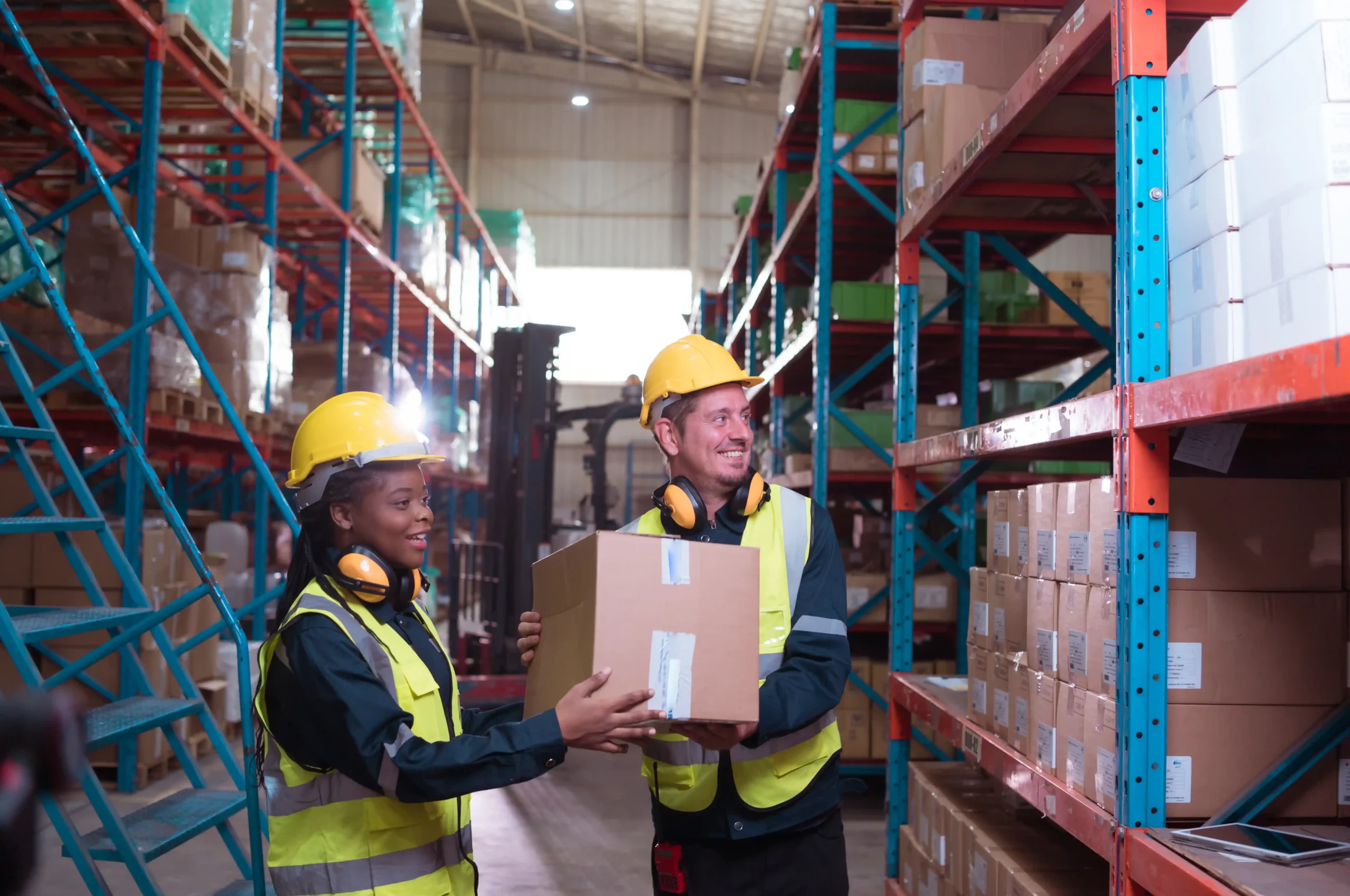
One thing I emphasize with every client is that great storage is not about the bins—it’s about the workflow. When the system is built properly, the picker’s path becomes shorter, the number of touches goes down, and the chances of mistakes drop dramatically.
Small items are especially sensitive to poor organization because they require attention to detail, and workers need to see exactly what they are picking. Using bins, dividers, and visible drawers keeps everything in its own place, reducing the mental load on the picker.
When employees don’t waste time searching or guessing, they move faster and feel more confident in their work. Strong storage solutions also support better replenishment routines, clearer counts, and cleaner aisles—all of which contribute to smoother operations.
Technology plays a major role in managing small items, especially when SKU counts are high. Barcodes are the foundation because they link each location to a digital record that prevents mis-picks.
RFID is useful for tracking tools, small equipment, or high-value parts that need security. Pick-to-light increases picking speed dramatically by guiding workers directly to the correct bins with visual cues. A WMS ties everything together by mapping locations, tracking counts, and automating replenishment alerts.
At Tri-Link FTZ, we’ve seen clients improve accuracy by over 40% just by adding location barcodes and linking them to their inventory software. Even simple tools like handheld scanners or tablets at workstations make a big difference in day-to-day workflow.
One of the biggest mistakes I’ve seen businesses make is choosing storage systems that only solve today’s problems instead of preparing for the next five years. When you work with thousands of small items, growth happens quickly and quietly because every new product line adds dozens of tiny components. T
hat’s why scalable systems like boltless shelving, modular drawers, and louvred panels become essential—they can expand without shutting down operations. I always guide clients to build their system in phases instead of rushing into one huge installation that may not fit their future workflow.
By tracking SKU growth and order volume, it becomes easier to re-slot items and prevent overcrowding before it causes chaos. In many cases, businesses come to us after their existing layout collapses under expansion, and we help them rebuild with a layered approach that fits their budget and long-term needs.
The right warehouse storage solutions for small items should grow with your business instead of limiting it.

After decades in logistics, I’ve seen how easy it is for companies to overspend on storage equipment because they buy the wrong tools for the wrong types of inventory. A common issue is purchasing bins that are too large, which wastes precious shelf space and makes items shift around during picking.
Companies also underestimate the importance of clear labeling, and the cost of fixing picking errors ends up being far greater than the cost of proper labeling tools. Another frequent trap is investing in automated systems before fixing the basics like layout, organization, and replenishment routines.
Automation amplifies efficiency only when the foundation is strong, and many businesses learn this the hard way. To help customers avoid these mistakes, I always start with an audit, develop a clear plan, and ensure every dollar spent supports actual operational performance.
Safety is often overlooked in small-parts zones because the items themselves are light, but I’ve seen plenty of accidents caused by cluttered bins, unstable shelves, or tools left out. Even small components can become slip hazards if they fall on the floor or accumulate under shelving units.
At Tri-Link FTZ, we follow strict safety guidelines that include proper weight distribution on shelves, clear aisle markings, and locked storage for hazardous or high-value items. I’ve also learned that fire code compliance matters more than people realize, especially when using plastic bins, enclosed cabinets, or tall shelving.
Every storage system must be matched with the right decking, flue space, and anchoring mechanisms to prevent collapse or fire risk. With routine inspections and strong safety processes, a small-item storage area becomes predictable, secure, and easy to manage even during peak season.
These safeguards build confidence for both management and employees.
One memorable project involved a distributor with thousands of automotive fasteners scattered across random shelves, and workers were losing hours hunting for SKUs. After we installed visible storage cabinets, reorganized bins by size, and added barcodes, their picking errors dropped dramatically.
In another facility, an e-commerce company struggled with slow picking times because their small items were spread across too many aisles. We built a dedicated pick module with carton flow racks, and their picks per hour increased substantially overnight.
I also helped an MRO department that kept misplacing critical spare parts, and integrating modular drawers with digital location mapping finally stabilized their inventory counts. These examples remind me how powerful the right system can be when it’s tailored to the business.
After 35 years, I’ve learned that even small adjustments predict major long-term improvements. Read more here.

Any business planning to improve their small-item storage should follow a clear checklist to prevent overspending and ensure long-term results. I always start by auditing the current state of your small parts area, including lost items, mislabeled bins, and slow-moving SKUs that take up prime space.
From there, identifying requirements such as pick frequency, product fragility, or security needs helps shape the right solution. Once the requirements are clear, planning the layout becomes easier because everything has a purpose instead of being placed randomly.
After layout planning, choosing the correct combination of shelving, drawers, panels, or cabinets becomes a strategic decision rather than a guess. Finally, layering in technology like barcodes, a WMS, or pick-to-light creates a complete operation that runs smoothly.
This checklist is simple, but it prevents the most expensive problems I see in warehouses.
At Tri-Link FTZ, improving small-item storage is one of the most requested services we offer because many businesses underestimate how complex these areas really are. Our team starts by analyzing your workflow, SKU characteristics, and operational bottlenecks so we can design a customized solution that fits your business.
Once we understand your challenges, we build a layout and recommend the right storage systems—including bins, shelving, drawers, or carton flow—to improve picking speed and accuracy. We also handle installation, labeling, technology integration, and ongoing support, which ensures your team always has clear processes to follow.
With over 35 years of experience, we’ve helped companies across manufacturing, e-commerce, automotive, and healthcare transform their small-item storage systems. This hands-on approach is what allows us to deliver operational improvements that last for years.
Every system we install is designed to grow with your business and support your long-term goals.
After decades of managing complex warehouse environments, I’ve learned that the right warehouse storage solutions for small items can completely transform how a business operates. When small parts are organized, labeled, and stored in systems built for efficiency, everything becomes easier—from picking to replenishment to cycle counts.
The improvements in accuracy, speed, and space savings add up quickly, and they often outperform much larger investments elsewhere in the warehouse. At Tri-Link FTZ, my team and I have helped hundreds of businesses build small-item storage systems that grow with them, not against them.
With the right layout, tools, and technology, even the most chaotic small-parts area can become one of the most productive corners of your warehouse.
Share this article