When we talk about warehouse storage rates per pallet, we’re talking about the amount a business pays each month to store a single pallet of goods inside a warehouse. Most companies I work with assume this fee simply reflects the amount of space the pallet takes up, but the reality is more complex.
The rate includes space, labor, equipment, insurance, and the operational systems that ensure a pallet is stored safely and tracked accurately. After three decades running a 3PL and Foreign Trade Zone, I’ve seen how important it is for companies to understand what drives these numbers, because the difference between a fair rate and an inflated one can make or break profitability.
In simple terms, this cost represents the monthly “rent” your pallet pays to live inside a professional logistics environment. The term itself is easy to understand, but how it’s calculated is where businesses often need the most clarity.

In my experience, the biggest surprise for new clients is learning that pallet storage isn’t a single flat fee. Every warehouse calculates its storage slightly differently, and that can make comparing quotes frustrating.
When we calculate warehouse storage rates per pallet at Tri-Link FTZ, we consider the type of racking, the height of the pallet, the amount of handling required, and the level of service the client needs. A pallet that moves often costs more than a pallet that barely moves because it consumes more labor and equipment time.
Another factor is inventory turnover, since fast-turning products generate more inbound and outbound activity. Location matters too, because labor costs, land costs, and insurance vary sharply between regions.
Over the years, I’ve found that companies save the most money not by chasing the cheapest rate, but by choosing the warehouse that aligns its pricing structure with how their business truly operates.
One of the most important things I teach clients is that a pallet storage rate covers far less than they think. The monthly charge normally includes the physical space the pallet occupies, basic insurance at standard warehouse liability limits, and standard tracking inside a WMS.
It usually does not include pallet-in fees, pallet-out fees, labeling, re-palletizing, shrink wrapping, or lot-tracking beyond what the warehouse already uses. Over the years, I’ve seen companies shocked by their first invoice because they didn’t realize how many small touches happen inside a warehouse.
Every time a forklift operator moves your pallet, scans it, rotates it, or stages it for outbound shipping, the warehouse absorbs labor and equipment cost. This is why clear communication is essential, because knowing what is and is not included helps prevent surprises and improves cost predictability.
The best warehouses are transparent, and transparency is something we take pride in at Tri-Link FTZ.
The type of warehouse plays an enormous role in determining warehouse storage rates per pallet. Dry storage costs less than climate-controlled storage because temperature and humidity systems eat up energy and maintenance budgets.
A pallet of electronics or pharmaceuticals requires far more care than a pallet of basic retail goods. The racking system also matters, because selective racking is more expensive to operate than bulk floor storage but allows for better access and accuracy.
As a 3PL, I’ve seen how products with unusual dimensions, fragile packaging, or high-value inventory require additional safety measures that increase operational cost. Even pallet height affects pricing, since a tall pallet might consume two rack spaces instead of one.
For clients importing goods, choosing an FTZ warehouse can reduce overall landed cost because duty is deferred until the product leaves the zone, making total costs lower even if the per-pallet rate is slightly higher. Read more here.

One of the least understood areas of logistics pricing is how warehouses bill for pallet storage. Some warehouses bill by average inventory, while others bill by the peak pallet count of the month. I’ve worked with companies that unknowingly stored peak volumes for only two days but were billed for the entire month at the higher count, simply because they didn’t ask about billing methodology.
Minimum charges can also affect the total cost, especially for companies storing fewer than fifty pallets. Another area to clarify is whether your warehouse bills per calendar month or every thirty days, because that small difference adds up over time.
From my experience, businesses lower their storage costs significantly when they understand these billing patterns. A responsible warehouse partner always explains its billing structure clearly, and that clarity is part of how we operate.
It’s common for businesses to gather three or four warehouse quotes and then compare them strictly by the storage rate, but that approach rarely tells the full story. I always encourage companies to “equalize” their quotes by converting everything to an all-in monthly cost per pallet.
Some warehouses include WMS access in their rate while others charge for it separately. Some include cycle counts and some bill every time a count is performed.
Over the years, I’ve created comparison sheets for clients so they can see how every fee influences the total cost, because the cheapest storage rate often ends up being the most expensive once all the add-ons are included. The smartest approach is to evaluate accuracy, service level, technology capabilities, shrinkage rates, and billing transparency alongside the base pallet rate.
That’s how companies find long-term logistics partners rather than short-term storage vendors.
One of the most valuable skills any business can develop is the ability to estimate its own warehousing expenses before requesting quotes. After decades in the industry, I’ve found that companies save thousands of dollars when they understand how to translate their inventory profile into a predictable cost model.
The foundation of the calculation is knowing how many pallet positions you actually need, how long those pallets will stay in storage, and how many times they will move each month. When we help clients calculate projected expenses, we start by identifying their inbound and outbound patterns, because movement often impacts cost more than storage days.
We also analyze pallet height, stacking ability, and SKU density, especially for clients with varied product lines. Once the basic structure is clear, most companies realize their true cost is determined not just by warehouse storage rates per pallet but by how efficiently they manage their inventory flow.
Here is a simple, intuitive table that demonstrates how different pallet counts and movement levels change the estimated monthly cost. This kind of table helps clients visualize how small adjustments in operations can lead to major savings.
Pallets Stored | Pallet-In Fee | Pallet-Out Fee | Monthly Storage Cost | Estimated Monthly Total |
50 Pallets | $6 Each | $6 Each | $1,250 | $1,850 |
100 Pallets | $5 Each | $5 Each | $2,400 | $3,400 |
250 Pallets | $4 Each | $4 Each | $5,500 | $7,500 |
These numbers are general examples, but over the years they’ve helped many clients understand how operational choices affect their costs. The more consistent the flow, the easier it becomes to predict monthly spending.
As a result, businesses make fewer mistakes and negotiate with far more confidence.
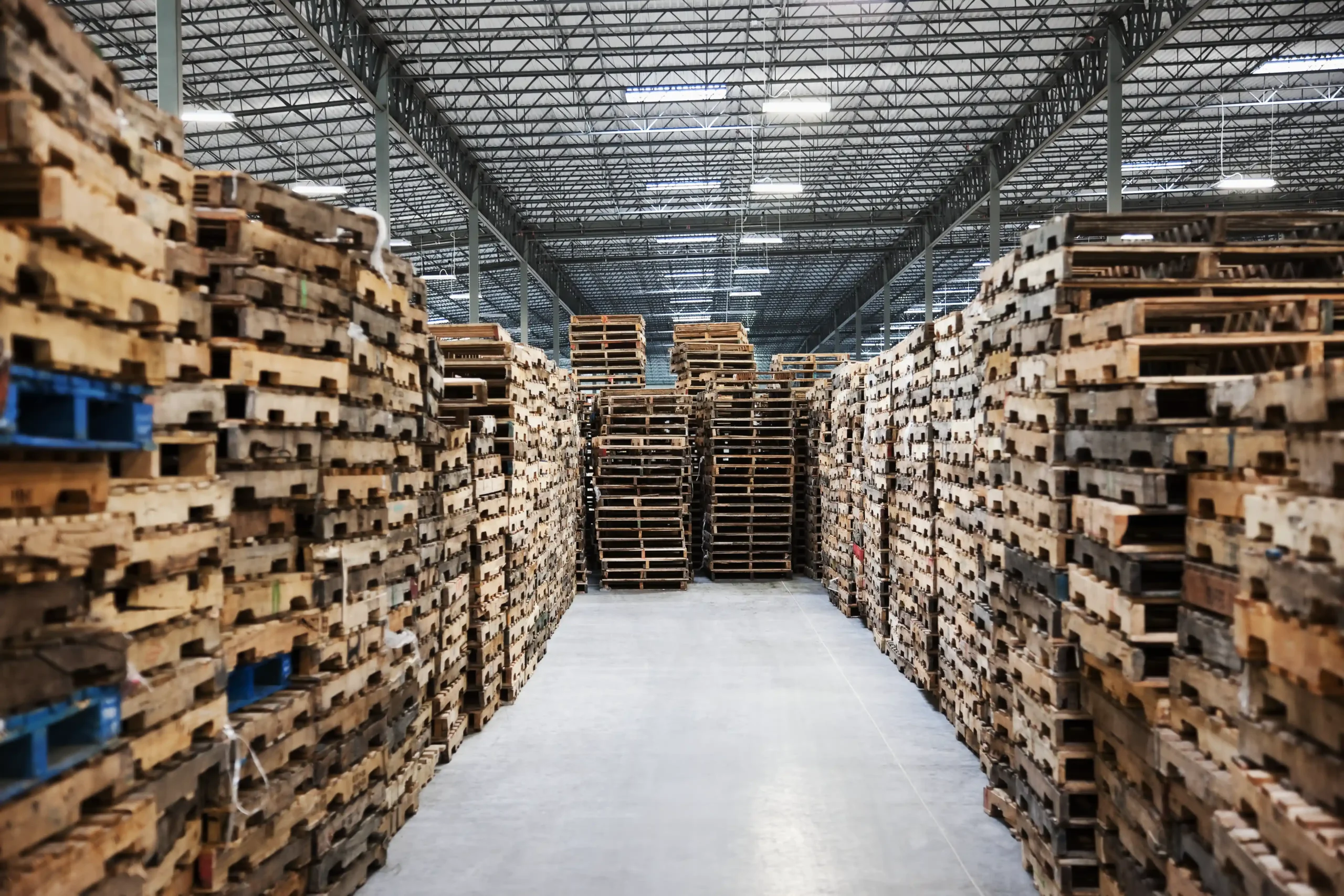
A common misconception is that an FTZ warehouse always costs more, but that’s rarely true when you analyze total landed cost. Over my years operating Tri-Link FTZ, I’ve seen importers dramatically reduce duty payments by storing merchandise inside the zone before it officially enters U.S. commerce.
It’s important to understand that even if warehouse storage rates per pallet inside an FTZ are slightly higher, the duty deferral or inversion benefits often outweigh the difference. Companies importing high-duty goods, seasonal merchandise, or products destined for re-export can gain substantial savings simply by changing the storage location.
There’s another advantage clients sometimes overlook: FTZ environments require strict compliance and inventory control, which often leads to better accuracy and fewer shrinkage issues. I have watched several multi-million-dollar brands switch to FTZ warehousing not only for cost reduction but also for higher operational stability.
Better tracking, clearer audit trails, and more rigorous documentation help companies avoid costly mistakes. When clients weigh the long-term benefits rather than just the storage rate, an FTZ becomes one of the most powerful tools in their logistics strategy.
Whenever a business asks me to review competing proposals, I always start with the fine print. The most common problem I see is inconsistent pricing structures that make it nearly impossible to compare quotes fairly.
One warehouse may show a low storage rate but inflate its pallet-in and pallet-out fees. Another might offer reasonable base rates but bury technology fees, cycle count charges, or reporting costs inside the contract.
Many times, I’ve helped companies realize that the option they thought was most affordable was actually the most expensive once every fee was accounted for. The next factor we study is service consistency, because a warehouse that lacks disciplined processes can cost clients dearly in the long run.
I’ve seen businesses lose major retail accounts because of mispicks, missed deadlines, or inaccurate inventory reporting. Price matters, but reliability matters more.
A strong warehouse partner should provide accurate SLAs, transparent communication, and meaningful reporting that supports the client’s growth. This is why I encourage teams to consider more than just warehouse storage rates per pallet and instead evaluate the entire operational value.
A warehouse is not simply a cost center—it’s an extension of your supply chain.
Over the years, clients have asked me whether it’s possible to reduce storage spending while maintaining strong operational performance, and my answer is always yes. Improving inventory management is the most effective way to lower costs because it directly affects how many pallets you store and how often they move.
When clients reduce dead stock, shorten dwell time, and streamline SKU counts, the savings appear almost immediately. Another strategy involves improving storage density by adjusting pallet height, packaging efficiency, or racking configuration, which helps clients get more value out of the space they occupy.
Long-term agreements also create opportunities for discounted pricing, since warehouses prefer predictable volume. Many clients don’t realize they can negotiate pallet tiers, seasonal adjustments, or shared-volume arrangements that bring down their average cost.
I’ve guided companies through this process many times, and the improvements often reshape their entire cost structure. Beyond negotiation, optimization tools like advanced WMS platforms, forecasting software, and demand planning help clients align product flow with real customer demand.
When businesses operate with clarity, their storage needs become manageable, predictable, and cost-effective, even before considering warehouse storage rates per pallet as a standalone number. Read more here.

Planning ahead is one of the best habits a growing company can develop, and forecasting storage needs is a major part of that process. When clients share their sales projections with us, we translate those numbers into expected pallet counts using simple ratios that connect units sold, case configurations, and pallet loads. T
his helps us spot bottlenecks before they happen and ensures the warehouse layout matches the client’s real operational needs. Many companies underestimate how much space they’ll need during growth periods, especially when onboarding larger retailers or expanding into new regions.
The most successful businesses build flexible models that consider seasonality, promotions, and shifting demand cycles. Warehouse forecasting doesn’t need to be complicated, but it does need to be consistent.
Over the years, I’ve found that businesses that update their projections regularly avoid the panic and extra expense that come with rushed storage decisions. With good planning and the right visibility tools, companies stay ahead of their capacity needs and avoid unexpected cost spikes tied to warehouse storage rates per pallet.
After more than thirty-five years in the 3PL and FTZ industry, I’ve seen firsthand how powerful it is when businesses truly understand their warehouse costs. The companies that take time to learn what influences their pallet rates, how billing works, and how inventory flows through a warehouse always make better decisions.
They avoid hidden fees, negotiate smarter contracts, and partner with warehouses that genuinely support their growth. While many businesses focus only on warehouse storage rates per pallet, the real advantage comes from understanding the entire system around those rates.
When you combine clear pricing with strong inventory planning, reliable service, and strategic use of FTZ benefits, storage becomes more than a line item—it becomes a competitive edge. My goal in sharing this experience is to help businesses operate with confidence, clarity, and a deeper understanding of the logistics world that supports their success.
Share this article