Clothing warehouse storage refers to the systems, processes, and environments used to store hanging and folded garments in a warehouse while protecting their quality and ensuring fast, accurate order fulfillment. It includes everything from racking types and shelf layouts to climate control, labeling conventions, and the technology that supports inventory visibility and picking efficiency.

After more than three decades running Tri-Link FTZ, I’ve learned that storing clothing is nothing like storing general inventory. Apparel has its own unique rhythm, its own vulnerabilities, and its own demands from both retailers and consumers.
When we began working with our first large fashion client years ago, it immediately became clear how different the operational needs were. Instead of uniform boxes on pallets, we were suddenly dealing with thousands of SKUs, endless variations of sizes and colors, and garments that could wrinkle, stretch, fade, or lose value overnight if not stored properly.
These challenges shape the entire design of a warehouse, from the type of shelving you choose to the way you train your team to handle each product. In this article, I walk through the same principles we apply every day to optimize clothing warehouse storage, helping apparel brands reduce damage, improve accuracy, and scale without wasting space or money.
One of the biggest surprises for companies entering the apparel sector is how quickly SKU counts grow. A single style might come in four colors and seven sizes, turning one product into nearly thirty individual SKUs that must each be tracked, picked, and put away correctly.
This alone requires a level of labeling and organization that most industries never need. Clothing also behaves differently in storage—knitwear stretches under its own weight, silk creases easily, and darker colors can fade when exposed to the wrong type of lighting.
Add to that the fast turnover of fashion trends and the pressure for same-day fulfillment, and you quickly understand why warehouses that succeed in fashion are the ones that build systems designed for flexibility. From my experience, the companies that struggle the most are those that treat apparel like ordinary inventory instead of treating it as a living, changing assortment that demands specialized care.
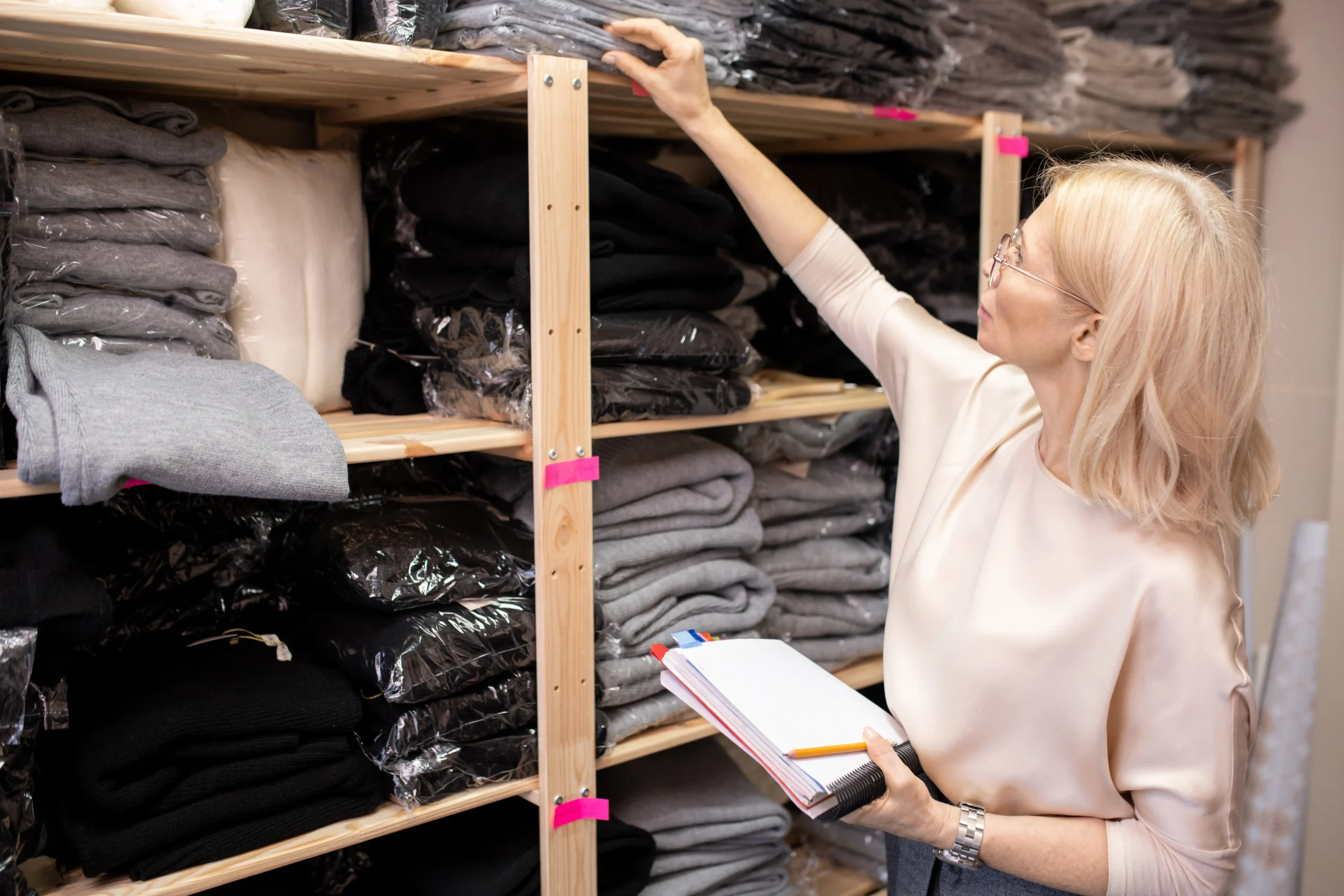
Every apparel warehouse begins with a simple question: should this item hang or fold? But answering that question well requires understanding the nature of each material. Lightweight fabrics like silk or chiffon belong on hangers to avoid creases, while structured jackets need shaped hangers to keep their form.
Denim, knitwear, and basic tops usually store better when folded, but even then, the way you fold them affects how well they hold their shape over time. When we first built out our apparel section at Tri-Link FTZ, we created dedicated zones for high-value and delicate items, adding garment bags and wider spacing to prevent rubbing or snagging.
These adjustments might seem small, but they prevent damage that would otherwise show up as returns or customer complaints. The better your team understands each fabric and its vulnerabilities, the stronger your overall storage strategy becomes.
Environmental control is one of the most overlooked aspects of managing clothing inventory, even though it directly affects product quality. Most garments store best between 65 and 72 degrees Fahrenheit, and when temperature shifts outside that range, you risk condensation, mildew, or fabric degradation.
Humidity must also stay consistent; anything above 55% invites mold growth, while levels that drop too low can cause fibers to dry out and lose elasticity. In our facility, we invested early in climate monitoring because many of our fashion clients ship globally, and garments may sit for weeks as they wait for customs clearance or seasonal release dates.
Maintaining air quality is equally important. Dust accumulation may seem harmless, but once it settles into textured fabrics, it can be difficult to remove without cleaning or reprocessing the garment.
Over the years, we’ve learned that a clean, balanced environment is the foundation on which all successful clothing warehouse storage operations are built. Read more here.
Selecting the correct storage systems is one of the most important decisions an apparel business can make, because the wrong setup leads to wasted space, slower picking times, and higher labor costs. In my experience running Tri-Link FTZ, a clothing warehouse always benefits from a mix of storage types rather than a single solution.
Hanging garments require one system, folded garments require another, and bulk boxed items might need a third approach entirely. For example, many apparel companies rely heavily on garment-on-hanger racks for dresses, suits, and outerwear, while using high-density shelving or carton flow for denim and tops.
The key is to balance selectivity with space efficiency, ensuring workers can reach SKUs quickly without overcrowding the aisles. When these systems work together, the result is a warehouse that operates faster, cleaner, and at a much lower cost per unit. Read more here.
Hanging garments present unique challenges because they can easily wrinkle, lose shape, or stretch if stored incorrectly. This is where garment-on-hanger (GOH) solutions become essential, especially for formal wear or structured apparel.
At Tri-Link FTZ, we often design GOH systems with adjustable rails so clients can change spacing based on seasonal items or shifting SKU profiles. Long dresses, for example, need safe vertical clearance, while shorter items like shirts allow you to stack rails more tightly.
Some clients take this a step further by using multi-level catwalk systems, which maximize vertical airspace without increasing footprint. These systems make picking visually intuitive, allowing workers to find items faster while maintaining garment quality.
Over time, GOH storage has consistently proven to be one of the biggest operational wins for brands that depend on high presentation value.
The picking strategy must match your storage system, or you’ll end up with bottlenecks and unnecessary handling. Apparel companies often rely on zone picking because it allows teams to specialize in specific product groups.
This reduces travel time and ensures that workers become familiar with the unique needs of particular garments. Batch picking is another strategy that works extremely well for eCommerce, especially during peak seasons when volume spikes dramatically.
Workers pull multiple orders at once, then sort them downstream where space and lighting are more controlled. In our facility, we also use pick-and-sort methods for mixed orders containing both hanging and folded items.
This ensures garments remain in their optimal storage environment until the very last step. When picking strategies align with system design, it creates a steady flow from storage to packout, reducing damage and improving order accuracy.
Garment protection goes far beyond simply choosing the right rack or shelf. Every touchpoint in the warehouse—from receiving to picking to packing—affects product quality.
We train our staff to use the correct hangers for each type of garment, because using the wrong shape or size can distort shoulders or necklines. Folded items also require consistency; a poorly folded sweater might stretch or crease in a way that reduces its value.
Cleanliness plays a major role as well, since dust and lint cling easily to textured fabrics. We keep food and drinks out of storage zones and have strict housekeeping routines to maintain garment integrity.
When these practices become part of the daily culture, damage rates drop, returns decrease, and customers receive items that look and feel new.
Strong inventory control is the backbone of every successful apparel warehouse, because clothing assortments change constantly and require precise tracking. At Tri-Link FTZ, we rely heavily on clear SKU naming conventions that communicate style, size, color, and season at a glance.
This system not only makes training easier but also improves accuracy when workers move quickly through storage zones. Real-time visibility is also essential, especially for brands selling through multiple channels.
Without accurate stock levels, companies risk overselling, underselling, or creating backorders that frustrate customers. Cycle counts and frequent audits help maintain accuracy, and over the years, we’ve learned that even small improvements to labeling and scanning workflows can significantly reduce mispicks.
A well-organized warehouse is one where every item has a name, a location, and a clear path from inbound to final shipment. To illustrate how environmental conditions support accuracy and product longevity, here is a simple reference table used in our facility:
Storage Factor | Recommended Range | Why It Matters |
Temperature | 65–72°F | Prevents fabric degradation and mildew |
Humidity | 45–55% | Protects fibers from mold and brittleness |
Light Exposure | Low UV, indirect | Reduces fading and discoloration |
Air Quality | Clean, filtered | Prevents dust buildup on garments |
Cleanliness | Daily housekeeping | Maintains garment presentation quality |
This table gives teams a clear standard to maintain, ensuring clothing warehouse storage remains consistent and predictable.

Today’s apparel brands operate in a world where demand shifts quickly, and automation has become a powerful tool to keep pace. We’ve integrated everything from pick-to-light systems to conveyor-based sortation in our facility to help clients streamline their operations without needing massive increases in labor.
A good WMS is at the heart of this process because it provides the intelligence that ties storage, picking, and packing together. Features like size grids, multi-location storage, and automated putaway rules make a major difference in how smoothly a warehouse runs.
In addition, autonomous mobile robots can now handle repetitive travel tasks, freeing workers to focus on accuracy and garment care. These technologies do not replace people; they amplify their performance and reduce the small errors that often compound into larger issues.
Over the years, we’ve learned that automation works best when implemented with a clear purpose, especially in environments as dynamic as apparel.
With customer expectations rising and competition increasing, apparel companies cannot afford disorganized or inefficient warehouses. Clothing warehouse storage isn’t just about where garments sit; it’s about how smoothly they move, how well they are protected, and how reliably they reach customers.
After 35 years in the industry, I’ve seen firsthand how the right storage strategy transforms an apparel business from unpredictable to unstoppable. Whether it’s integrating GOH rails, building a mezzanine, refining picking workflows, or implementing advanced technology, every improvement compounds into faster shipping, fewer returns, and lower operational costs.
At Tri-Link FTZ, we take pride in helping brands of all sizes strengthen their fulfillment operations, scale their storage intelligently, and deliver products that customers love. If you’re ready to elevate your apparel logistics, we’re here to help you build a stronger, more efficient path forward.
Clothing storage inside a warehouse may look simple on the surface, but once you understand the complexity of apparel inventory, it becomes clear how much strategy and detail sit behind every rack, shelf, and picking lane. After 35 years in this industry, I’ve seen how the right combination of storage systems, environmental controls, workflow design, and technology can transform even the most overwhelmed apparel operation into a fast, accurate, and scalable fulfillment engine.
The success comes from respecting the unique nature of garments—their fabrics, their shapes, their sensitivity to handling—and then building processes that protect both their quality and their value. Whether your business is growing, reorganizing, or preparing for peak seasons, improving your approach to clothing warehouse storage is one of the smartest investments you can make.
At Tri-Link FTZ, we’re committed to helping apparel brands operate with the kind of efficiency and confidence that leads to long-term success, and we’re ready to support you as your inventory, your channels, and your ambitions continue to expand.
Share this article