Little warehouse storage refers to compact warehouse spaces designed to support inventory storage, processing, and distribution for businesses that don’t need or can’t yet justify a full-size warehouse. These spaces are smaller, more flexible, and more cost-effective, allowing companies to operate efficiently while staying close to key markets or customers.
In many cases, they serve as the first step toward scalable logistics operations.
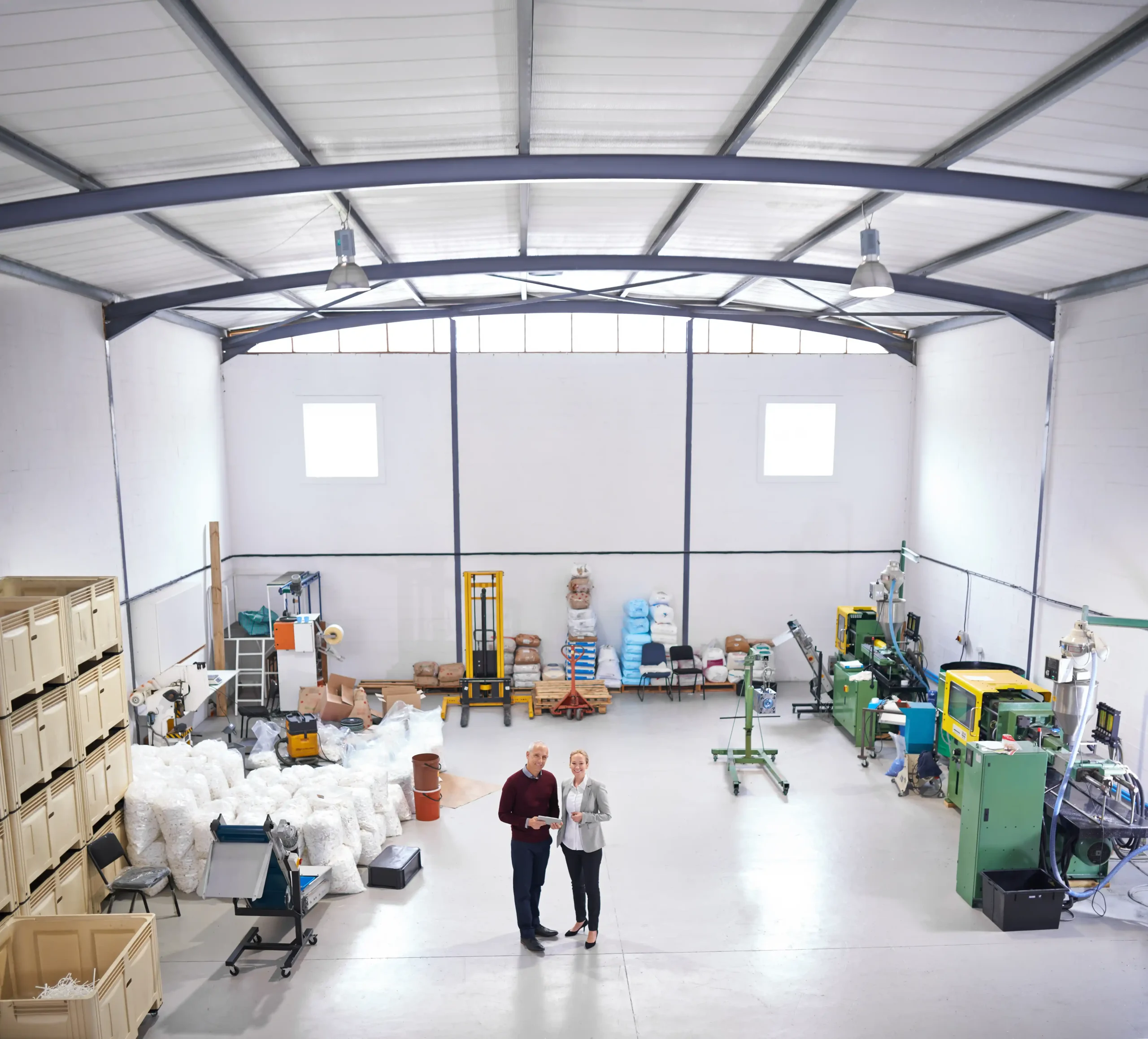
Over the past 35 years leading Tri-Link FTZ, I’ve worked with hundreds of brands that began their journey inside small warehouse environments. I’ve seen businesses struggle with tight aisles, overflowing racks, and constant mispicks simply because the space wasn’t designed to adapt to their growth.
When I step into a warehouse like that, the first thing I look for is how the space is being used versus how it could be used with a smarter structure. Even little warehouse storage can become incredibly powerful when the flow makes sense, and that’s something we’ve spent decades helping our clients understand.
Running operations inside little warehouse storage presents a unique set of challenges that larger spaces can easily hide. I’ve met companies who were losing hours of productivity each week simply because fast-moving items were stored in the farthest corners or because incoming pallets blocked aisles that everyone needed to use.
When a warehouse is small, every mistake becomes bigger—one misplaced pallet can disrupt an entire picking route, and one unplanned delivery can push operations into chaos. These limitations also affect order accuracy, because crowded shelving often leads to mislabeled or hard-to-reach items.
Over the years, I learned that solving small-space issues doesn’t start with buying more equipment; it starts with understanding how people move through the warehouse and how inventory flows from receiving to shipping.
Whenever I consult with a company using little warehouse storage, the first step is always evaluating the current layout. I walk the floor, watch how staff moves, and note where congestion builds up throughout the day.
In many cases, the receiving area overlaps with the picking path, or workers must weave around staging pallets that should have a designated home. I also assess how the vertical space is used, because small warehouses often have more height than they think.
If I can double the usable cubic space just by reorganizing racking or adding a mezzanine, that becomes an immediate win for the business. Every inch inside a small warehouse should support productivity, and that starts with identifying what’s working and what’s not.

Once I understand how a team uses its space, I begin designing a layout that works with their workflow instead of fighting against it. In little warehouse storage, the choice of layout—whether U-shaped, L-shaped, or straight-through—can completely transform efficiency.
I’ve watched businesses reduce travel time by over 30% simply by creating a dedicated receiving lane that keeps new inventory from interrupting the picking process. Vertical storage becomes a major factor here as well, because unused height represents lost capacity.
By stacking smartly and zoning items by velocity, a small warehouse can feel significantly larger. When everything has a clearly defined place, workers move confidently, and overall operations become smoother and more predictable. Read more here.
I always remind clients that not all racking and shelving systems are created equal, especially when dealing with little warehouse storage. Adjustable selective racking is often the best choice because it allows companies to modify shelf heights as their product mix changes.
For businesses handling smaller SKUs, bin shelving provides dense organization without wasting space. I’ve also seen mobile racks help teams reconfigure their aisles based on seasonal volume, which is incredibly useful for brands facing fluctuating demand.
Even simple additions like carton flow racks can speed up picking by keeping inventory visible and easy to reach. Safety is also a major concern in small spaces, so ensuring racking is anchored, labeled, and accessible is essential for long-term reliability.
When a warehouse is small, inventory discipline becomes the backbone of success. I’ve watched companies double their usable storage capacity by implementing better receiving processes, labeling systems, and cycle counting routines. The most important step is ensuring that every SKU has a designated location.
Without that structure, even little warehouse storage can become overwhelmed in a matter of days. Velocity-based slotting also makes an enormous difference because storing fast-moving items near packing reduces time spent walking around the warehouse.
For operations that deal with large order volumes, creating small kitting or assembly zones can reduce clutter and keep products moving efficiently. The more consistent the routines, the easier it becomes to maintain accuracy and productivity.

In my experience, zoning is one of the simplest and most effective ways to optimize a small warehouse. I always encourage businesses to establish distinct areas for receiving, put-away, picking, packing, and returns.
When these spaces overlap, the entire warehouse slows down. Even a few painted lines on the floor can bring clarity to the operation.
Another improvement comes from designing travel paths that reduce unnecessary backtracking. I’ve seen warehouses adopt one-way paths to keep workers moving safely and fluidly through tight aisles.
Adding visual cues, color-coded labels, and clear signage further reduces confusion. With these small improvements, even a compressed workspace becomes a powerful, well-structured environment.
As warehouses become more complex, technology plays a major role in keeping little warehouse storage efficient and reliable. I’ve encouraged many of our clients to adopt simple barcode scanners because they drastically reduce errors while speeding up receiving and picking.
A basic warehouse management system can map storage locations, track inventory movement, and give real-time data that helps guide smarter decisions. Even something as small as printing standardized labels can improve accuracy across the entire operation.
Mobile devices also allow teams to confirm counts, update inventory, and process orders without returning to a desk. The goal is not to complicate the warehouse but to support small spaces with tools that create consistency, clarity, and better control. Read more here.
There comes a point when a business must decide whether optimizing its little warehouse storage is enough or if it’s time to scale into something bigger. I’ve had countless conversations with business owners who felt overwhelmed by growth but weren’t sure what the next step should be.
The first sign is when staff spends more time moving things out of the way than fulfilling orders. Another sign is when every corner is filled, and the cost of inefficiency becomes higher than the cost of additional space.
At Tri-Link FTZ, we help companies evaluate whether a larger facility or a 3PL partnership makes the most financial sense. Outsourcing can provide immediate relief by adding storage capacity, labor support, and fulfillment expertise without forcing a long-term real estate commitment.
The right choice depends on growth patterns, SKU volume, and the complexity of operations.

Over the years, I’ve seen how valuable it is for businesses to work with a partner who understands the realities of small warehouse operations. When companies choose Tri-Link FTZ, they gain access to secure facilities, experienced staff, and a variety of services designed to support both small and growing businesses.
I always advise looking for a provider that offers scalable options, strong security systems, and easy access for deliveries. It’s also important to choose a partner that can evolve with the business, whether that means adding storage, expanding fulfillment services, or integrating compliance support.
In the world of logistics, flexibility is just as important as capability, and a good partner ensures that a company never feels limited by its space.
Over my decades in logistics, I’ve learned that little warehouse storage is often the place where the best operational habits are formed. Small spaces force clarity, discipline, and creativity in ways that larger warehouses rarely require.
When businesses learn to manage inventory, space, and workflow effectively in a compact environment, they gain the skills they need to succeed at any scale. I’ve watched startups grow into national brands because they mastered their foundation inside a well-organized small warehouse.
With the right systems and a clear strategy, these spaces become engines of growth rather than limitations. Even after all these years, I still find it inspiring how much potential can exist within a modest footprint when it’s optimized the right way.
Looking back at the many businesses I’ve supported over the past 35 years, I can say with confidence that little warehouse storage can be one of the smartest operational decisions a company makes. When the space is organized well, supported by the right tools, and aligned with a clear workflow, it becomes an efficient engine that drives growth instead of slowing it down.
Even the smallest warehouse can outperform a larger one when it’s optimized with intention and maintained with discipline. No matter what stage a business is in, the key is remembering that success starts with how you use the space you already have and how prepared you are to scale when the time is right.
Share this article